The Function of Light Weight Aluminum Foundries in Progressing Lightweight Manufacturing Solutions
Light weight aluminum factories greatly add to the development of lightweight production solutions. Their innovative spreading modern technologies yield high-strength, lightweight elements crucial for markets such as automotive and aerospace. This improvement not just boosts item efficiency yet likewise promotes sustainability with making use of recycled products. As these factories adapt to arising techniques and technologies, they pave the way for future advancements in producing efficiency and environmental responsibility. What lies ahead in this transformative journey?
The Benefits of Lightweight Products in Manufacturing
As sectors significantly look for effectiveness and sustainability, the adoption of lightweight products in production has become an essential technique - aluminum casting. These materials, specifically aluminum and composites, use many advantages that improve production procedures and product performance. Mostly, their lowered weight adds to lower energy consumption during transport and procedure, resulting in considerable cost savings
Additionally, lightweight products help with the design of even more facility geometries, enabling better innovation in item development. This adaptability commonly causes enhanced functionality and efficiency, satisfying the advancing demands of modern-day customers.
Additionally, making use of lightweight materials can enhance the longevity of items as a result of their resistance to rust and tiredness. This durability not just reduces upkeep prices however additionally supports sustainability efforts, as longer-lasting items add to much less waste. To sum up, the advantages of light-weight materials are essential in driving effectiveness, development, and ecological responsibility in manufacturing.
Innovations in Aluminum Casting Technologies
Recent advancements in light weight aluminum casting modern technologies are reinventing the production landscape, specifically in the manufacturing of light-weight parts. Innovations such as high-pressure die spreading and vacuum die casting have actually considerably boosted the accuracy and surface coating of aluminum parts - Aluminum Foundry. These methods enable the development of intricate geometries while lessening product waste and improving mechanical properties
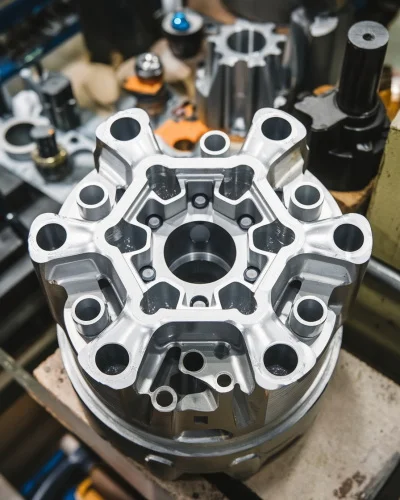
In addition, the execution of real-time monitoring systems ensures quality control throughout the casting procedure, causing even more regular product outcomes. Jointly, these technologies not only improve the efficiency of aluminum parts however likewise sustain the market's shift towards even more sustainable production methods.
Applications of Light Weight Aluminum Elements in Various Industries
While aluminum components have long been utilized in different markets, their flexibility and light-weight properties proceed to drive cutting-edge applications across industries such as auto, aerospace, and building. In the automotive sector, aluminum is progressively used for engine blocks, wheels, and body panels, improving fuel performance and efficiency. Aerospace manufacturers take advantage of light weight aluminum for aircraft frameworks and components, taking advantage of its strength-to-weight proportion to boost fuel economy and payload capacity.
In the building and construction industry, light weight aluminum is favored for home window structures, roof covering, and architectural components, offering resilience and resistance click for info to rust while minimizing total building weight. In addition, the electric and electronics industries profit from aluminum's conductivity and lightweight nature, using it in wiring, enclosures, and warm sinks. These diverse applications highlight the essential role of light weight aluminum elements, which not only meet market demands but additionally contribute to developments in item design and performance throughout numerous fields.
Sustainability and Power Effectiveness in Light Weight Aluminum Foundries
The aluminum factory market plays an essential role in promoting sustainability and power performance, specifically as demand for light-weight components remains to grow across numerous sectors. Factories are significantly adopting environmentally pleasant practices, such as using recycled light weight aluminum, which greatly minimizes energy usage and greenhouse gas exhausts compared to key light weight aluminum manufacturing.
Advancements in casting modern technologies boost energy effectiveness by optimizing the melting processes and decreasing waste. Methods like die casting and financial investment spreading allow for exact material use, minimizing excess and scrap.
Furthermore, several foundries are buying sustainable energy sources to power procedures, additionally reducing their carbon impact. Applying energy administration systems enables foundries to boost and keep an eye on energy usage, ensuring they run at peak effectiveness.

Future Fads in Lightweight Production Solutions
How will arising innovations shape the future of lightweight production solutions? Developments such as advanced materials, automation, and additive manufacturing are readied to redefine manufacturing processes. The combination helpful resources of smart manufacturing modern technologies, including the Internet of Things (IoT) and synthetic knowledge (AI), will certainly make it possible for real-time tracking and optimization, enhancing efficiency and reducing waste.

As sustainability continues to be a paramount problem, lightweight options will increasingly concentrate on reusing and reusing products, straightening with round economic climate principles. This advancement in light-weight manufacturing will not just improve item efficiency yet additionally add to environmental goals, making certain that the sector stays competitive in a rapidly changing market landscape.
Regularly Asked Inquiries
Just How Do Aluminum Foundries Make Sure Top Quality Control in Production?
Light weight aluminum factories ensure quality control in production through rigorous testing, standard treatments, and continual tracking - aluminum casting. They execute skilled employees and innovative modern technologies to keep uniformity, decrease defects, and satisfy market requirements throughout the production process
What Are the Key Tests Dealt With by Aluminum Foundries?
Light weight aluminum shops deal with difficulties such as varying raw product expenses, preserving manufacturing performance, making certain regular top quality, adjusting to technological advancements, and conference ecological guidelines, all of which influence their general operational effectiveness and competitiveness on the market.
How Does Aluminum Recycling Impact Foundry Operations?
Light weight aluminum recycling significantly improves foundry operations by decreasing raw material expenses, reducing power usage, and lowering environmental effect. This lasting technique allows factories to boost performance while satisfying enhancing need for lightweight, high-performance aluminum items.
What Abilities Are Needed for Workers in Light Weight Aluminum Foundries?
Employees in aluminum foundries need abilities in metallurgy, machining, top quality control, and safety and security techniques. Proficiency in running equipment, comprehending alloy buildings, useful site and analytic are also important for efficient manufacturing and preserving high security standards.
Just How Do Aluminum Foundries Deal With Waste Management?
Light weight aluminum foundries take care of waste via reusing scrap metal, utilizing effective waste segregation techniques, and sticking to environmental policies. They execute sustainable techniques to reduce landfill payments, making sure that dangerous products are dealt with responsibly.
Light weight aluminum shops substantially add to the evolution of lightweight production options. Recent advancements in light weight aluminum spreading innovations are changing the production landscape, specifically in the production of lightweight elements. While aluminum components have long been made use of in various markets, their convenience and light-weight residential or commercial properties continue to drive ingenious applications throughout fields such as auto, aerospace, and construction. In addition, the electric and electronic devices industries profit from aluminum's conductivity and lightweight nature, utilizing it in circuitry, enclosures, and heat sinks. The aluminum foundry industry plays a vital duty in advertising sustainability and power efficiency, particularly as demand for lightweight components continues to expand across numerous markets.